
EX-proof LED lamps - our light for your safety!
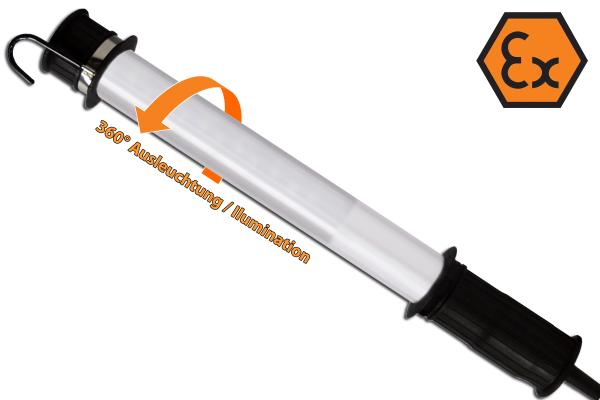
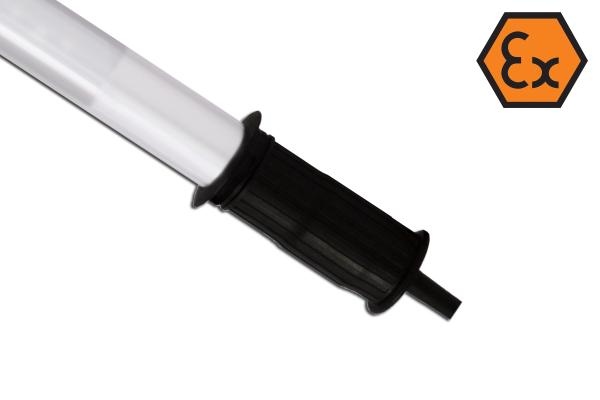
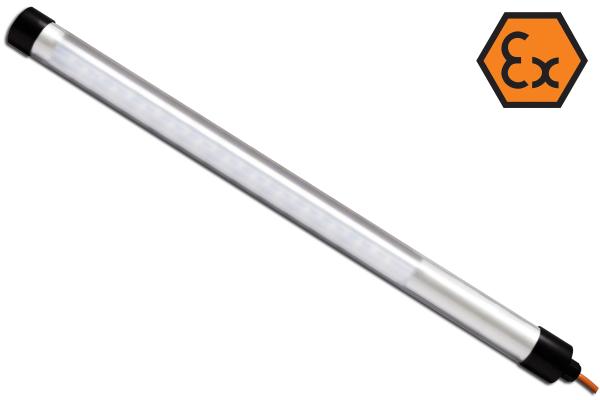
Explosion-proof lights are specially designed hand lamps, tube lights and work lamps that are designed for use in potentially explosive environments. The term "ex-proof" comes from the abbreviation of the Latin word "explosio" (explosion) and refers to devices designed to minimize the risk of an explosion in hazardous atmospheric conditions. These hand lamps meet certain safety standards and certifications to be used in environments where flammable gases, vapors, mists or dusts may be present.


.jpg "Preview: KE-LED-EX 4003 hand lamp 3x POWER LED | IP68")







1 to 16 (from a total of 21)
Areas of application:
Our explosion-proof luminaires, also known as explosion-proof luminaires, are used in various industrial areas where explosive atmospheres can occur. Here are some typical areas of use:- Petrochemical industry - In refineries, chemical plants and petrochemical operations where flammable gases and vapors are present.
- Oil and Gas industry - On drilling rigs, production facilities, and other oil and gas industry facilities where combustible materials may be present.
- Chemical industry - In facilities that work with chemical substances, explosion-proof luminaires are used in warehouses, production areas and laboratories.
- Food and beverage industry - In areas where flammable substances such as flour dust or alcoholic vapors may be present, explosion-proof luminaires are used to illuminate machines and systems or as inspection lights for control and cleaning work.
- Pharmaceutical industry - In pharmaceutical production facilities, laboratories and storage rooms where potentially flammable substances are present.
- Energy production - In power plants, especially in areas where combustible materials are used.
- Aerospace industry - In areas of aerospace facilities where fuels or other flammable materials are used.
- Logistics and warehousing - In warehouses where potentially flammable substances are stored or in tank trucks to illuminate the filling and dispensing fittings.
- Biogas plants / sewage treatment plants - In plants in which gases are produced due to biological processes.
FAQ – Frequently Asked Questions about Explosion-Proof Lighting
What does explosion protection mean for lighting?
Explosion protection refers to measures that prevent luminaires from acting as an ignition source in hazardous areas. This includes design, electrical, and thermal safety requirements.
What is an Ex-luminaire?
An Ex-luminaire (explosion-proof light) is specifically developed and certified to operate safely in hazardous areas without generating sparks, hot surfaces, or electrical discharges.
What does ATEX mean?
ATEX stands for „Atmosphères Explosibles“ and refers to EU directives regulating equipment and protective systems used in potentially explosive atmospheres.
Which zones exist in explosion protection?
Zone 0 / 20: constantly or frequently explosive atmosphere
Zone 1 / 21: occasionally
Zone 2 / 22: rare and short-term
(Gas = 0–2, Dust = 20–22)
Zone 1 / 21: occasionally
Zone 2 / 22: rare and short-term
(Gas = 0–2, Dust = 20–22)
Which ignition sources can originate from luminaires?
Typical ignition sources include: hot surfaces, electrical sparks, electrostatic discharge, and electric arcs.
What does the „Ex“ marking on a luminaire mean?
The „Ex“ marking indicates that the luminaire has been tested and approved according to international standards for use in potentially explosive atmospheres.
What is the temperature class for Ex-luminaires?
The temperature class indicates the maximum surface temperature of a luminaire, e.g., T1 to T6. It must remain below the ignition temperature of the surrounding medium.
Which types of protection exist for Ex-luminaires?
Typical types of protection: Ex d (flameproof enclosure), Ex e (increased safety), Ex i (intrinsic safety), and Ex n (non-sparking).
Where are explosion-proof luminaires used?
Typical application areas: chemical industry, oil and gas industry, food industry (dust explosions), paint shops, mills, and silos.
What is the difference between gas and dust explosion protection?
Gas explosion protection concerns flammable gases/vapors, while dust explosion protection concerns combustible dusts. Requirements differ regarding sealing and surface temperatures.
Which standards apply to Ex-luminaires?
Important standards: IEC/EN 60079 series and the ATEX Directive 2014/34/EU.
What does the IP rating mean for Ex-luminaires?
The IP rating (e.g., IP66) indicates how well the luminaire is protected against dust and water ingress – independent of its explosion protection rating.
Why is LED technology advantageous in Ex-areas?
LEDs generate less heat, have a longer lifespan, and reduce maintenance efforts – which is crucial in hard-to-reach Ex-zones.
What must be considered during the installation of Ex-luminaires?
Installation should only be performed by trained specialists, adhering to zone classifications and using approved components (cables, glands).
Can standard luminaires be used in Ex-zones?
No. Standard luminaires pose a high ignition risk and are legally prohibited in hazardous areas.
What is intrinsically safe lighting?
Intrinsic safety (Ex i) means that the electrical energy is limited so that even in the event of a fault, no ignition is possible.
How is maintenance of Ex-luminaires carried out?
Regular visual inspections, checking seals and housings, and replacement only with original parts.
How much does an Ex-luminaire cost?
Costs are higher than for standard luminaires because special materials, certifications, and testing procedures are required.
How do I identify the right Ex-luminaire for my application?
Crucial factors are: zone, gas or dust class, temperature class, and ambient conditions.
Which errors commonly occur with Ex-lighting?
Incorrect zone classification, unsuitable luminaire selection, improper installation, and neglected maintenance.